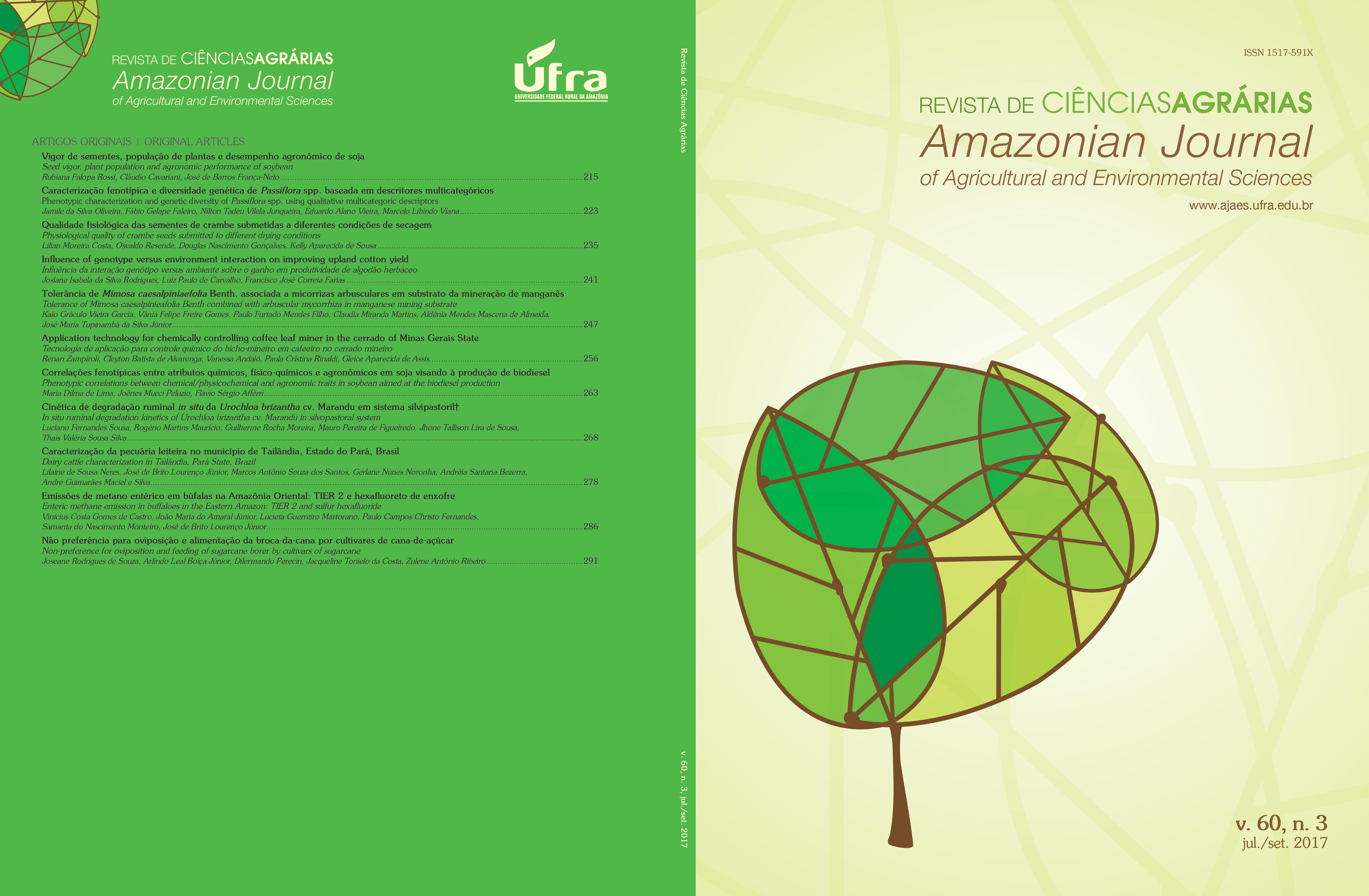
Methane enteric measurement in buffaloes in the Eastern Amazon
TIER 2 and sulfur hexafluoride
Keywords:
Co-products, greenhouse gases, nutrition, ruminantsAbstract
In Brazil, agriculture and livestock are considered major emitters of greenhouse gases (GHG), through which animal production and land use contribute significantly to these emissions. The aim of this study was to compare the enteric methane emissions through the use of the TIER 2 methodology, which considers the category of the animal, the production system, and diet type, and also through the use of the sulfur hexafluoride (SF6) tracer gas technique. These experimental data were obtained from the PECUS Project. Twenty adult buffaloes were kept in individual stalls and fed with four diets consisting of 0.00, 0.25, 0.50 and 1.00% levels of palm cake (Elaeis guineensis). The diets were similar in digestibility and metabolizable energy in both methodologies. The results showed similar emission averages among the methodologies, except for the 1% level of palm cake. Thus, TIER 2 can be considered a good estimator of enteric methane emissions when the nutritional composition of the diet and other animal characteristics involved in the methodology are known. Measurements with trace gas SF6 show good sensitivity to assess enteric methane emissions; however, they involve high costs, basically associated with the animals and their diet, use of skilled workers, equipment for sampling, and laboratory facilities.
Downloads
Downloads
Published
Issue
Section
License
Authors retain copyright and grant the Journal the right to the first publication. Authors are encouraged to and may self-archive a created version of their article in their institutional repository, or as a book chapter, as long as acknowledgement is given to the original source of publication. As the Journal provides open access to its publications, articles may not be used for commercial purposes. The contents published are the sole and exclusive responsibility of their authors; however, the publishers can make textual adjustments, adaptation to publishing standards and adjustments of spelling and grammar, to maintain the standard patterns of the language and the journal. Failure to comply with this commitment will submit the offenders to sanctions and penalties under the Brazilian legislation (Law of Copyright Protection; nº 9,610; 19 February 1998).
.jpg)